
Lead Fast Reactors GIF provisional System Steering Committee
The first GIF provisional System Steering Committee for Lead Fast Reactors (LFR pSSC) was established after the LFR Memorandum of Understanding was signed in 2010. In 2025, under the new 2025 GIF Framework Agreement, a new version of the GIF LFR MoU was opened for signature. It will become effective once three signatures are gathered. The resulting committee is aimed at exploring a broad range of topics related to Lead Fast Reactors. One LFR is currently under construction and about a dozen are under development around the world.
DISCLAIMER: The entry into force of the 2025 GIF Framework Agreement on 1st March 2025 brings changes to the GIF membership. The website will be updated in due course to reflect these changes.
Activities and Membership of the Lead Fast Reactor GIF provisional System Steering Committee
GIF LFR pSSC will become effective once the LFR MoU under the GIF 2025 Framework Agreement is signed by at least three signatories to the GIF FA. Being under an MoU it will not have full fledged R&D projects ongoing similarly to the LFR MoU signed under the expired 2005 GIF FA.
Below are the countries invited to sign the new LFR MoU:


If you want to learn more about the Lead Fast Reactor technology head to the LFR System description page. If you want to learn more about the latest outcomes and international efforts carried out under the GIF LFR pSSC please refer to the latest GIF Annual Report.
Signatories to the MoU establishing the GIF Lead Cooled Fast Reactors provisional System Steering Committee (LFR pSSC) | ||
|---|---|---|
Partners | LFR MoU linked to the expired 2005 GIF Framework Agreement | LFR MoU Linked to the 2025 GIF FA (current) |
INEST (China) | October 2019 - February 2025 | Invited to sign the new LFR MoU |
JRC (Euratom) | November 2010 - February 2025 | Invited to sign the new LFR MoU |
Tokyo Tech (Japan) | November 2010 - February 2025 | Invited to sign the new LFR MoU |
SNU (Korea) | November 2015 - February 2025 | Invited to sign the new LFR MoU |
ROSATOM | July 2011 - February 2025 | Not invited to sign the 2025 GIF FA |
DOE (USA) | February 2018 - February 2025 | Invited to sign the new LFR MoU |
LFR pSSC leadership & Technical Secretariat
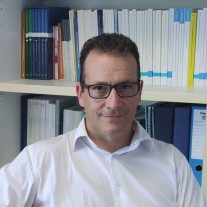
Dr
Mariano TARANTINO
Dr. Mariano Tarantino graduated in Nuclear Engineering at the University of Pisa in 2004. Ph.D. in Nuclear and Industrial Safety in 2008. Since 2008 he has been an ENEA researcher in the field of liquid metal technologies for nuclear applications, mainly related to Generation IV - LFR. From 2010 to 2018 Scientific Advisor of the Program Agreement between ENEA and the Ministry of Economic Development, where he coordinated all research and development activities on fourth generation nuclear fission systems refrigerated with liquid lead. Currently he is the head of Energy Nuclear Systems Division of the ENEA Nuclear Department, member of the Executive Board of FALCON Consortium devoted to ALFRED DEMO LFR construction, and member of the newcleo R&D steering committee, aiming at supporting the development of LFR-AS-30 and LFR-AS-200. With a background in thermos-fluid dynamics, expert in nuclear technology and lead cooled fast reactors, with an experimental vocation, he coordinates various projects at a national and international level. Among those international efforts Dr Tarantino is the Euratom representative at the Generation IV International Forum provisional Lead Fast Reactors System Steering Committee.

Dr
Anton Moisseytsev
Dr. Anton Moisseytsev is a Principal Nuclear Engineer at Argonne National Laboratory and a U.S. Representative to the Generation IV LFR provisional System Steering Committee. Dr. Moisseytsev has twenty-two years of experience at ANL in nuclear engineering including nuclear power plant design and analysis, nuclear power plant safety analysis, system development, analysis of experiments, physical model development, and computer code validation. Dr. Moisseytsev worked on development of Lead-Cooled Fast Reactor and other fast reactor concepts at ANL since 2001, including Small Secure Transportable Autonomous Reactor (SSTAR), Secure Transportable Autonomous Reactor with Liquid Metal (STAR-LM), Secure Transportable Autonomous Reactor for Hydrogen production (STAR-H2), and a demonstrator based upon the European Lead-cooled SYstem (ELSY), as well as sodium-cooled reactors. Dr. Moisseytsev contributed to safety analyses and plant control and simulation of various reactor concepts and advanced energy conversion systems under development at ANL and elsewhere.

Ms
Xiaoluo WANG
Xiaoluo Wang joined the GIF Technical Secretariat in 2025, where she serves as Technical Secretary for GFR System Steering Committee, GFR Project Management Boards (Conceptual Design & Safety; Fuel & Core Material), SCWR System Steering Committee, and SCWR Project Management Boards (Material & Chemistry; Thermal Hydraulics & Safety; System Integration & Assessment Provisional).
Prior to joining GIF, Xiaoluo started her professional career as an intern at IAEA, after which she worked as a nuclear engineer at Nuclear Power institute of China (NPIC), responsible for advanced nuclear fuel research and design. She has also worked at Ministry of Finance of China and China National Nuclear Corporation (CNNC), mainly focus on bilateral and multinational Cooperation initiatives.