
Education and Training Series #105: Science for the safe disposal of nuclear waste - a German perspective
This webinar is part of a series hosted by the GIF Education and Training Working Group since 2016.
The link to register to this webinar can be found on this page under "about this webinar".
Who should attend?
Policymakers, industry professionals, regulators, researchers, students, the general public.
About the "GIF Education and Training" Webinars
These webinars, organised by the GIF Education and Training Working Group are streamed live monthly. The recordings and slide decks are accessible after the webinar on this website. These webinars cover a very broad range of technical and policy related topics. At the end of 2023 they have been viewed by more than 15000 people (approximately half of the views during the live streams and the other half views being of the archives on the public GIF website). In total, the GIF webinars have reached Generation IV enthusiasts, scientists, and engineers in more than 80 countries.
These webinars are organised and hosted by the GIF Education and Training Working Group (ETWG).
About this Webinar
In 2024 Germany completed the phasing out of nuclear energy production. Since the release of the site selection act in Germany in 2017 the site selection process for a deep geological repository for high level nuclear waste is ongoing, coordinated by the German Federal Company for Radioactive Waste Disposal. Since several decades, the Institute for Nuclear Waste Disposal of the Karlsruhe Institute of Technology (KIT-INE), as a part of the Helmholtz association, is performing independent Radio-Geochemical research to support the safe disposal of nuclear wastes. Studies focus on lab investigations in the radiochemical laboratories at KIT Campus North, but include also large-scale experiments in underground research laboratories in crystalline (Grimsel) and clay rock (Mont-Terri) in Switzerland. Such studies allow gaining knowledge on radionuclides interactions with the geological and the engineered barrier systems under near-natural and repository relevant conditions. In this webinar we will highlight recent results of our studies about the migration behavior of radionuclides in crystalline and clay rock, and how they feed into the German site selection process and contribute to the international research on the safety of deep geological repositories.
Dr. Patricia Paviet from PNNL, USA, member of GIF ETWG will facilitate this webinar.
Presentation of the webinar
Meet the presenters and moderator
Dr
Francesca QUINTO
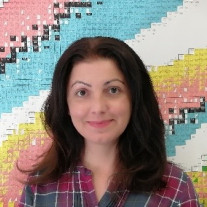
Dr. Francesca Quinto is deputy head of the “Radionuclide Speciation and Analytics” department at the Institute for Nuclear Waste Disposal of the Karlsruhe Institute of Technology (KIT-INE). After receiving her PhD in Novel Physics Methodologies applied to Environmental Research at the “Seconda Universitá degli Studi di Napoli” (Italy), she was for one year at the VERA Laboratory of the University of Vienna (Austria) and afterwards Postdoc at Joint Research Centre - Institute for Transuranium Elements in Karlsruhe. Her research focusses on ultra-trace analysis with Accelerator Mass Spectrometry and radionuclide migration in crystalline and clay rocks. She is a member of the German delegation of the Crystalline Club of the Nuclear Energy Agency and an experiment team delegate for the International Steering Committee of the Grimsel Test Site.
Dr
Frank HEBERLING
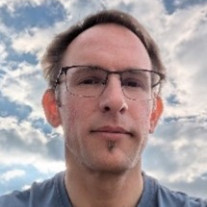
Dr. Frank Heberling is deputy head of the “Radioactive Waste and Barriers in Repository” department at the Institute for Nuclear Waste Disposal of the Karlsruhe Institute of Technology (KIT-INE) and lecturer in Applied Geosciences at KIT. He is leading a research group focusing on investigations of radionuclide migration in waste disposal barriers. He received his PhD in Geochemistry and Mineralogy at KIT. His research focusses on interactions of radionuclides with mineral phases, including synchrotron studies and thermodynamic modelling, as well as diffusion processes of radionuclides in clay materials. He is a member of the German delegation of the Clay Club of the Nuclear Energy Agency.
Dr
Patricia PAVIET
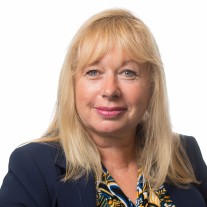
Dr. Patricia Paviet was the first chair of the GIF Education and Training Working Group (2015-2024). She now focuses on leading the efforts of the successful GIF Education and Training webinars series and has been doing so since the inception of this initiative in September 2016.
She serves on the GIF MSR pSSC representing the United States since 2021. She joined GIF in November 2015, as chair of the Education and Training Task Force. Outside GIF, Dr. Paviet is the National Technical Director of the Molten Salt Reactor Program for the US Department of Energy, Office of Nuclear Energy. She is managing the research supporting molten salt reactor development across six U.S. national laboratories. She is also a Senior Technical Advisor at Pacific Northwest National Laboratory, providing guidance on used nuclear fuel recycling. She has an extensive technical background on the nuclear fuel cycle (front and back end).