
Education and Training Series #104: Safety-Security-Safeguards (3S) Interface Case Study by GIF PRPPWG
This webinar is part of a series hosted by the GIF Education and Training Working Group since 2016.
The link to register to this webinar can be found on this page under "about this webinar".
Who should attend?
Policymakers, industry professionals, regulators, researchers, students, the general public.
About the "GIF Education and Training" Webinars
These webinars, organised by the GIF Education and Training Working Group are streamed live monthly. The recordings and slide decks are accessible after the webinar on this website. These webinars cover a very broad range of technical and policy related topics. At the end of 2023 they have been viewed by more than 15000 people (approximately half of the views during the live streams and the other half views being of the archives on the public GIF website). In total, the GIF webinars have reached Generation IV enthusiasts, scientists, and engineers in more than 80 countries.
These webinars are organised and hosted by the GIF Education and Training Working Group (ETWG).
About this Webinar
The Generation IV International Forum (GIF) was established as a co-operative international endeavor aimed at developing the research necessary to evaluate the feasibility and performance of fourth generation nuclear systems (Gen-IV systems), with the objective of making them available for industrial deployment by 2030.
The potential conflicts and synergies at the interfaces between the regimes of safety, security, and safeguards (2S and 3S interfaces) in nuclear facilities are increasingly being recognized, underscoring the importance of addressing them. With Gen-IV systems seeking to move towards deployment, it is an opportune moment to develop guidance on how to effectively identify and address these 2S and 3S interfaces during the earliest design stages. To this end, the GIF Proliferation Resistance & Physical Protection Working Group (PRPPWG), the GIF Risk & Safety Working Group (RSWG) and the GIF Very High Temperature Reactor System Steering Committee (VHTR-SSC) conducted a bottom-up 3S interface case study exercise on a notional pebble bed VHTR modular reactor. The objective of this exercise was to identify and characterize the 2S and 3S interfaces on the reference system, thereby developing some technology-neutral guidelines for the identification and characterization of 2S and 3S interfaces. The intent of the case study is to offer some guidance to designers and vendors interested in implementing a 3S-by-design (3SBD) approach to the development of a Gen-IV advanced modular reactor.
Among the most critical aspects of the interfaces considered are those that would compromise the objectives of each S regime, potentially leading to conflicts between each regime. Analyzing how each interface shares space, time, or resources can either mitigate these conflicts or bring positive synergistic outcomes. The optimized sharing of space, time and resources holds relevance for small or advanced modular reactors that occupy smaller spaces and/or utilize fewer resources compared to traditional large nuclear installations. The critical aspects distilled from the case study are summarized in this presentation.
Dr. Patricia Paviet from PNNL, USA, member of GIF ETWG will facilitate this webinar.
Presentation of the webinar
Meet the presenters and moderator

Dr
Bryan van der Ende
Dr. Bryan van der Ende is a senior research and development scientist in the Applied Physics Branch of Canadian Nuclear Laboratories (CNL) since 2013, where he is currently section head of the Experimental Safeguards group, as well as directorate lead for the area of Safeguards Systems. His work is focused on various detection modalities for nuclear security and safeguards applications, as well as other techniques for potential use in safeguards approaches. He is also interested in broader issues of nuclear safeguards and non-proliferation, such as the interfaces of nuclear facilities between safety, security and safeguards. Concurrent with this work, Bryan is an active member of the Generation IV International Forum Proliferation Resistance and Physical Protection Working Group (GIF PRPPWG), since 2019. Prior to joining CNL, Bryan served as an Assistant Professor in the Department of Physics at Acadia University from 2010 to 2013. He gained postdoctoral experience at the University of Utrecht in Utrecht, The Netherlands, from 2006 to 2009, and at Trent University in Peterborough, Ontario, Canada, from 2009 to 2010. Bryan earned his PhD in Physics at the University of Guelph in Guelph, Ontario, Canada, in 2006.
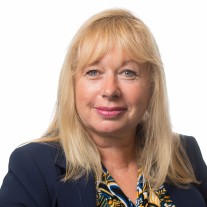
Dr
Patricia PAVIET
Dr. Patricia Paviet was the first chair of the GIF Education and Training Working Group (2015-2024). She now focuses on leading the efforts of the successful GIF Education and Training webinars series and has been doing so since the inception of this initiative in September 2016.
She serves on the GIF MSR pSSC representing the United States since 2021. She joined GIF in November 2015, as chair of the Education and Training Task Force. Outside GIF, Dr. Paviet is the National Technical Director of the Molten Salt Reactor Program for the US Department of Energy, Office of Nuclear Energy. She is managing the research supporting molten salt reactor development across six U.S. national laboratories. She is also a Senior Technical Advisor at Pacific Northwest National Laboratory, providing guidance on used nuclear fuel recycling. She has an extensive technical background on the nuclear fuel cycle (front and back end).