
Education and Training Series #106: Severe Accidents in SFRs: Safety Study Approach, Prevention and Mitigation by Design
This webinar is part of a series hosted by the GIF Education and Training Working Group since 2016.
The link to register to this webinar can be found on this page under "about this webinar".
Who should attend?
Policymakers, industry professionals, regulators, researchers, students, the general public.
About the "GIF Education and Training" Webinars
These webinars, organised by the GIF Education and Training Working Group are streamed live monthly. The recordings and slide decks are accessible after the webinar on this website. These webinars cover a very broad range of technical and policy related topics. At the end of 2023 they have been viewed by more than 15000 people (approximately half of the views during the live streams and the other half views being of the archives on the public GIF website). In total, the GIF webinars have reached Generation IV enthusiasts, scientists, and engineers in more than 80 countries.
These webinars are organised and hosted by the GIF Education and Training Working Group (ETWG).
About this Webinar
The book titled “Severe Accidents in Sodium Fast Reactors: Safety Study Approach, Prevention and Mitigation by Design” is a unique presentation of the research work from the Sodium Fast Reactor Severe Accident team at The French Alternative Energies and Atomic Energy Commission (CEA). This webinar will provide a brief overview of the state of the art on severe accident research which will help inform and direct further pre-conceptual Generation IV SFRs. Lessons learned from the pre-conceptual phase of the French ASTRID project and from Japanese SFR’s projects will be highlighted alongside illustrations of approaches to demonstrate the robustness of the design and evaluation of severe accident consequences. Focusing on in-core and out-core severe accident phenomena, this webinar analyses severe accident scenarios and mitigation, related calculations and tools, and key outcomes from the important experimental programs.
Dr. Patricia Paviet from PNNL, USA, member of GIF ETWG will facilitate this webinar.
Presentation made during the webinar
Meet the presenters and moderator
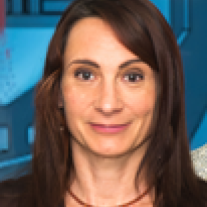
Dr
Nathalie SEILER
Dr. Nathalie Seiler (Editorial Board Member, responsible for chap 5) is a research director, fellow expert at the CEA. She is a thermal-hydraulics engineer and researcher in the field of severe accidents in third- and fourth- Generation nuclear reactors and has supervised the development of physical simulation tools, coupled with advanced statistical tools, for assessing the safety of sodium Fast Reactors under various accident transients.

Pr
Frederic BERTRAND
Prof. Frédéric Bertrand (Editorial Board Manager of the book ““Severe Accidents in Sodium Fast Reactors: Safety Study Approach, Prevention and Mitigation by Design) is a Research Director, a CEA Senior fellow and a Professor at the Institut National des Sciences et Techniques du Nucléaire (INSTN). He has worked for about 20 years at CEA in safety and conceptual design of innovative nuclear reactor (Gen IV and space reactors).
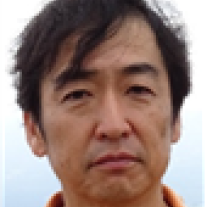
Mr
Shigenobu KUBO
Mr. Shigenobu Kubo (chapter editor for Japanese SFR’s projects) is a deputy Director of Fast Reactor Research and Development Department at the Japan Atomic Energy Agency (JAEA). He has been engaged in sodium-cooled fast reactor development since 1989 in Japan. His specialties are SFR system design, safety design, and related R&Ds. He was involved in the France-Japan ASTRID collaboration as design task leader and severe accident task leader.

Dr
Patricia PAVIET
Dr. Patricia Paviet was the first chair of the GIF Education and Training Working Group (2015-2024). She now focuses on leading the efforts of the successful GIF Education and Training webinars series and has been doing so since the inception of this initiative in September 2016.
She serves on the GIF MSR pSSC representing the United States since 2021. She joined GIF in November 2015, as chair of the Education and Training Task Force. Outside GIF, Dr. Paviet is the National Technical Director of the Molten Salt Reactor Program for the US Department of Energy, Office of Nuclear Energy. She is managing the research supporting molten salt reactor development across six U.S. national laboratories. She is also a Senior Technical Advisor at Pacific Northwest National Laboratory, providing guidance on used nuclear fuel recycling. She has an extensive technical background on the nuclear fuel cycle (front and back end).