
Education and Training Series #108: History of Nuclear Power Development
This webinar is part of a series hosted by the GIF Education and Training Working Group since 2016.
The link to register to this webinar can be found on this page under "about this webinar".
Who should attend?
Policymakers, industry professionals, regulators, researchers, students, the general public.
About the "GIF Education and Training" Webinars
These webinars, organised by the GIF Education and Training Working Group are streamed live monthly. The recordings and slide decks are accessible after the webinar on this website. These webinars cover a very broad range of technical and policy related topics. At the end of 2023 they have been viewed by more than 15000 people (approximately half of the views during the live streams and the other half views being of the archives on the public GIF website). In total, the GIF webinars have reached Generation IV enthusiasts, scientists, and engineers in more than 80 countries.
These webinars are organised and hosted by the GIF Education and Training Working Group (ETWG).
About this Webinar
Nuclear power technology has been a major asset since the mid-70s for decarbonizing electricity generation and for decreasing our reliance on fossil fuel. With more than 400 nuclear reactors currently in operation worldwide and more than 60 under construction, nuclear reactors will play a significant role for many years to come.
This seminar will give an overview of the history of world nuclear power development, from its very early days to today. To better understand the basic working principles of nuclear reactors, some elementary concepts in nuclear physics and radiation science will first be presented. The different generations of nuclear reactors will be detailed, also covering the on-going development of Small Modular Reactors (SMRs). The advantages/disadvantages of thermal reactors versus fast reactors will finally be discussed.
Dr. Patricia Paviet from PNNL, USA, member of GIF ETWG will facilitate this webinar.
Presentation of the Webinar
Meet the presenters and moderator
Pr
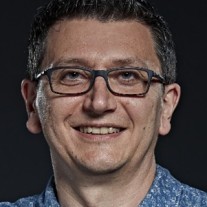
Christophe DEMAZIERE
Prof. Christophe Demazière earned is PhD in reactor physics in 2002 from Chalmers University of Technology, Gothenburg, Sweden, where he is now Full Professor at Chalmers. He is responsible for research and education in nuclear engineering. His expertise and research interests are in reactor physics, reactor dynamics, neutron noise, reactor multiphysics and reactor modelling.
He is the author of a book on the “Modelling of nuclear reactor multi-physics − From local balance equations to macroscopic models in neutronics and thermal-hydraulics” and has published more than 70 peer-reviewed journal articles and more than 130 peer-reviewed conference contributions.
Professor Demazière is the former coordinator of the EU-funded CORTEX project and currently coordinates the GRE@T-PIONEeR Alliance, which provides advanced education in reactor physics, modelling and safety, worldwide. He is also a member of the American Nuclear Society.
Dr
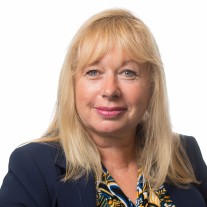
Patricia PAVIET
Dr. Patricia Paviet was the first chair of the GIF Education and Training Working Group (2015-2024). She now focuses on leading the efforts of the successful GIF Education and Training webinars series and has been doing so since the inception of this initiative in September 2016.
She serves on the GIF MSR pSSC representing the United States since 2021. She joined GIF in November 2015, as chair of the Education and Training Task Force. Outside GIF, Dr. Paviet is the National Technical Director of the Molten Salt Reactor Program for the US Department of Energy, Office of Nuclear Energy. She is managing the research supporting molten salt reactor development across six U.S. national laboratories. She is also a Senior Technical Advisor at Pacific Northwest National Laboratory, providing guidance on used nuclear fuel recycling. She has an extensive technical background on the nuclear fuel cycle (front and back end).