
Education and Training Series #109: Waste Characterization & Synroc Technology for Advanced Reactors & Future Fuel Cycles
This webinar is part of a series hosted by the GIF Education and Training Working Group since 2016.
The link to register to this webinar can be found on this page under "about this webinar".
Who should attend?
Policymakers, industry professionals, regulators, researchers, students, the general public.
About the "GIF Education and Training" Webinars
These webinars, organised by the GIF Education and Training Working Group are streamed live monthly. The recordings and slide decks are accessible after the webinar on this website. These webinars cover a very broad range of technical and policy related topics. At the end of 2023 they have been viewed by more than 15000 people (approximately half of the views during the live streams and the other half views being of the archives on the public GIF website). In total, the GIF webinars have reached Generation IV enthusiasts, scientists, and engineers in more than 80 countries.
These webinars are organised and hosted by the GIF Education and Training Working Group (ETWG).
About this Webinar
High-feasibility solutions for the safe and responsible management of nuclear wastes generated by emerging nuclear technologies are essential to support public confidence and regulatory compliance. Nuclear regulators increasingly require whole-of-life strategies that include definitive waste disposition pathways for intermediate-level (ILW) and high-level (HLW) wastes as part of approvals for new facilities. A critical element of these strategies is converting radioactive material into a stable waste form suitable for long-term disposal. Advanced Generation IV reactors, which employ non-standard fuel types, present unique waste challenges that cannot be addressed by conventional spent fuel management approaches. Bespoke treatment and disposal solutions are therefore required. ANSTO’s Synroc technology offers a highly adaptable approach for immobilizing such wastes. Using hot-isostatic pressing (HIP) consolidation within sealed canisters, Synroc enables the production of ceramic, glass, and composite waste forms tailored to the chemical, physical, and radiological properties of diverse waste streams. This process minimizes volatilization and emissions during high-temperature treatment, ensuring robust containment. This presentation will outline Synroc’s role in addressing waste streams from advanced reactors, including problematic species such as iodine, technetium, and molten salt residues, and highlight its maturation through deployment in ANSTO’s first-of-a-kind facility for radiopharmaceutical waste treatment.
Dr. Patricia Paviet from PNNL, USA, member of GIF ETWG will facilitate this webinar.
Presentation of the Webinar
Meet the presenters and moderator
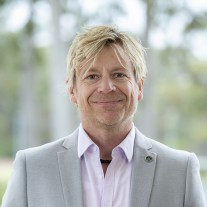
Mr
Daniel GREGG
Dan Gregg is Manager of Wasteform Engineering at ANSTO, where he leads the development and implementation of advanced technologies for the safe immobilization of radioactive waste. With extensive experience in nuclear waste treatment and materials engineering, Dan specializes in designing tailored wasteforms for challenging radioactive waste streams. He has played a key role in advancing ANSTO’s Synroc technology, including its application in a first-of-a-kind facility designed to convert radiopharmaceutical liquid waste into a disposal-ready form. Dan’s work supports sustainable nuclear technologies by delivering practical, scientifically robust solutions that meet stringent regulatory requirements and enable long-term waste disposition strategies.
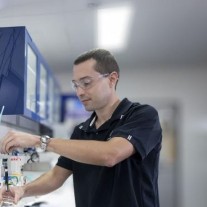
Mr
Anton PERISTYY
Anton Peristyy is Nuclear Waste Characterisation Lead at ANSTO. His focus is the characterisation of radioactive wastes to support Synroc waste treatment technologies. Anton’s primary area of expertise includes development, validation, and implementation of analytical methods for chemical and radiological characterisation of nuclear wastes. Anton delivers highly accurate and precise methodologies for waste sampling and characterisation at various ANSTO facilities. Much of his work is motivated by the requirement to dispose legacy and future nuclear wastes at ANSTO, as well as his passion to advance nuclear technologies by providing a better understanding of the waste properties.

Dr
Patricia PAVIET
Dr. Patricia Paviet was the first chair of the GIF Education and Training Working Group (2015-2024). She now focuses on leading the efforts of the successful GIF Education and Training webinars series and has been doing so since the inception of this initiative in September 2016.
She serves on the GIF MSR pSSC representing the United States since 2021. She joined GIF in November 2015, as chair of the Education and Training Task Force. Outside GIF, Dr. Paviet is the National Technical Director of the Molten Salt Reactor Program for the US Department of Energy, Office of Nuclear Energy. She is managing the research supporting molten salt reactor development across six U.S. national laboratories. She is also a Senior Technical Advisor at Pacific Northwest National Laboratory, providing guidance on used nuclear fuel recycling. She has an extensive technical background on the nuclear fuel cycle (front and back end).