
Education and Training Series #111: Advances in Monitoring Techniques for Molten Salt Reactor and Fuel Cycle
This webinar is part of a series hosted by the GIF Education and Training Working Group since 2016.
The link to register to this webinar can be found on this page under "about this webinar".
Who should attend?
Policymakers, industry professionals, regulators, researchers, students, the general public.
About the "GIF Education and Training" Webinars
These webinars, organised by the GIF Education and Training Working Group are streamed live monthly. The recordings and slide decks are accessible after the webinar on this website. These webinars cover a very broad range of technical and policy related topics. Since 2016 and as of 2026 they have been viewed by more than 20000 people (approximately half of the views during the live streams and the other half views being of the archives on the public GIF website). In total, the GIF webinars have reached Generation IV enthusiasts, scientists, engineers and policy makers in more than 90 countries.
These webinars are organised and hosted by the GIF Education and Training Working Group (ETWG).
About this Webinar
Molten salts are emerging as critical media for molten salt reactors and advanced fuel cycle processing technologies. However, these environments involve high temperatures, strong chemical corrosivity, complex chemical systems, and intense radiation, making real-time monitoring of chemical composition and redox conditions highly challenging. Such monitoring is important for corrosion monitoring, nuclear safeguards, measurement and control of fission products, detection of abnormal operating conditions, and acquisition of reliable thermophysical and thermochemical properties. This seminar highlights recent advances in electrochemical, spectroscopic, and other monitoring techniques designed for such extreme conditions. It also discusses the potential role of data analytics and artificial intelligence in improving monitoring performance.
Dr. Patricia Paviet from PNNL, USA, member of GIF ETWG will facilitate this webinar.
Presentation of the Webinar
Meet the presenter and moderator
Pr
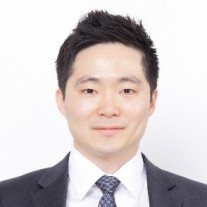
Sungyeol CHOI
Professor Sungyeol Choi is a Professor in the Department of Nuclear Engineering at Seoul National University (SNU), where he also serves as the Founding Head of the Integrated Major in Sustainable High-level Radioactive Waste Management. Prior to joining SNU, he served as an Associate Professor at KAIST, an Assistant Professor at UNIST, a Senior Researcher at the Korea Atomic Energy Research Institute (KAERI), and a Research Fellow at Harvard University. He currently serves as Vice-Chair of the OECD/NEA Global Forum on Nuclear Education, Science, Technology and Policy. He received his Ph.D. in Nuclear Engineering in 2012 and his B.S. in Nuclear Engineering in 2008, both from Seoul National University. His research focuses on used nuclear fuel management, with particular emphasis on molten salt chemistry and radioactive waste disposal.
Dr
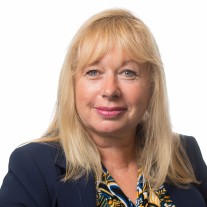
Patricia PAVIET
Dr. Patricia Paviet was the first chair of the GIF Education and Training Working Group (2015-2024). She now focuses on leading the efforts of the successful GIF Education and Training webinars series and has been doing so since the inception of this initiative in September 2016.
She serves on the GIF MSR pSSC representing the United States since 2021. She joined GIF in November 2015, as chair of the Education and Training Task Force. Outside GIF, Dr. Paviet is the National Technical Director of the Molten Salt Reactor Program for the US Department of Energy, Office of Nuclear Energy. She is managing the research supporting molten salt reactor development across six U.S. national laboratories. She is also a Senior Technical Advisor at Pacific Northwest National Laboratory, providing guidance on used nuclear fuel recycling. She has an extensive technical background on the nuclear fuel cycle (front and back end).