
Education and Training Series #115: Thermal properties of molten salts: crucial data for the development of MSRs
This webinar is part of a series hosted by the GIF Education and Training Working Group since 2016.
The link to register to this webinar can be found on this page under "about this webinar".
Who should attend?
Policymakers, industry professionals, regulators, researchers, students, the general public.
About the "GIF Education and Training" Webinars
These webinars, organised by the GIF Education and Training Working Group are streamed live monthly. The recordings and slide decks are accessible after the webinar on this website. These webinars cover a very broad range of technical and policy related topics. Since 2016 and as of 2026 they have been viewed by more than 20000 people (approximately half of the views during the live streams and the other half views being of the archives on the public GIF website). In total, the GIF webinars have reached Generation IV enthusiasts, scientists, engineers and policy makers in more than 90 countries.
These webinars are organised and hosted by the GIF Education and Training Working Group (ETWG).
About this Webinar
Thermal property data for molten salts are essential for the design, operation, and licensing of molten salt reactors (MSRs), yet accurate measurements remain challenging due to the hygroscopic and corrosive nature of these salts, particularly actinide-bearing compositions.
This talk will present recent advances in salt synthesis and purification with oxygen quantification, custom hermetic crucible development, and high-accuracy calorimetric techniques for determining phase equilibria, heat capacity, and enthalpy of phase transitions. Validated results are being integrated into the Molten Salt Database – Thermochemical (MSD-TC) as a community resource for MSR modeling.
Dr. Patricia Paviet from PNNL, USA, member of GIF ETWG will facilitate this webinar. The GIF ETWG webinar series started in 2016 and more than 100 webinars have been streamed since then. People from more than 80 countries have attended these webinars over the years. You can learn more about previous webinars and ETWG activities on the GIF website.
Presentation of the webinar
Meet the presenter and moderator

Dr
Juliano SCHORNE-PINTO
Dr. Juliano Schorne-Pinto is an Assistant Professor in the Nuclear Engineering Program at the University of South Carolina. His research centers on high-temperature chemistry and thermodynamics, with particular emphasis on actinides, molten salts, and nuclear materials. His expertise covers synthesis, characterization, and thermodynamic modeling (CALPHAD method), as well as thermal analysis techniques for determining phase equilibria, heat capacity, enthalpy increment, and heats of transition and mixing in radioactive and non-radioactive systems. His work provides reliable experimental data and thermodynamic models for the design, operation, and licensing of molten salt reactors, notably through his role as co-developer of the Molten Salt Database – Thermochemical (MSD-TC), supported by the DOE Molten Salt Reactor campaign. He has authored over 35 peer-reviewed publications. He received his PhD from the National Polytechnic Institute of Toulouse, France, in 2020, his MS from Polytech Montpellier, France, and his BS from the Federal University of Rio Grande do Sul, Brazil.
Dr
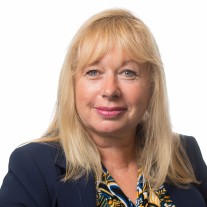
Patricia PAVIET
Dr. Patricia Paviet was the first chair of the GIF Education and Training Working Group (2015-2024). She now focuses on leading the efforts of the successful GIF Education and Training webinars series and has been doing so since the inception of this initiative in September 2016.
She serves on the GIF MSR pSSC representing the United States since 2021. She joined GIF in November 2015, as chair of the Education and Training Task Force. Outside GIF, Dr. Paviet is the National Technical Director of the Molten Salt Reactor Program for the US Department of Energy, Office of Nuclear Energy. She is managing the research supporting molten salt reactor development across six U.S. national laboratories. She is also a Senior Technical Advisor at Pacific Northwest National Laboratory, providing guidance on used nuclear fuel recycling. She has an extensive technical background on the nuclear fuel cycle (front and back end).